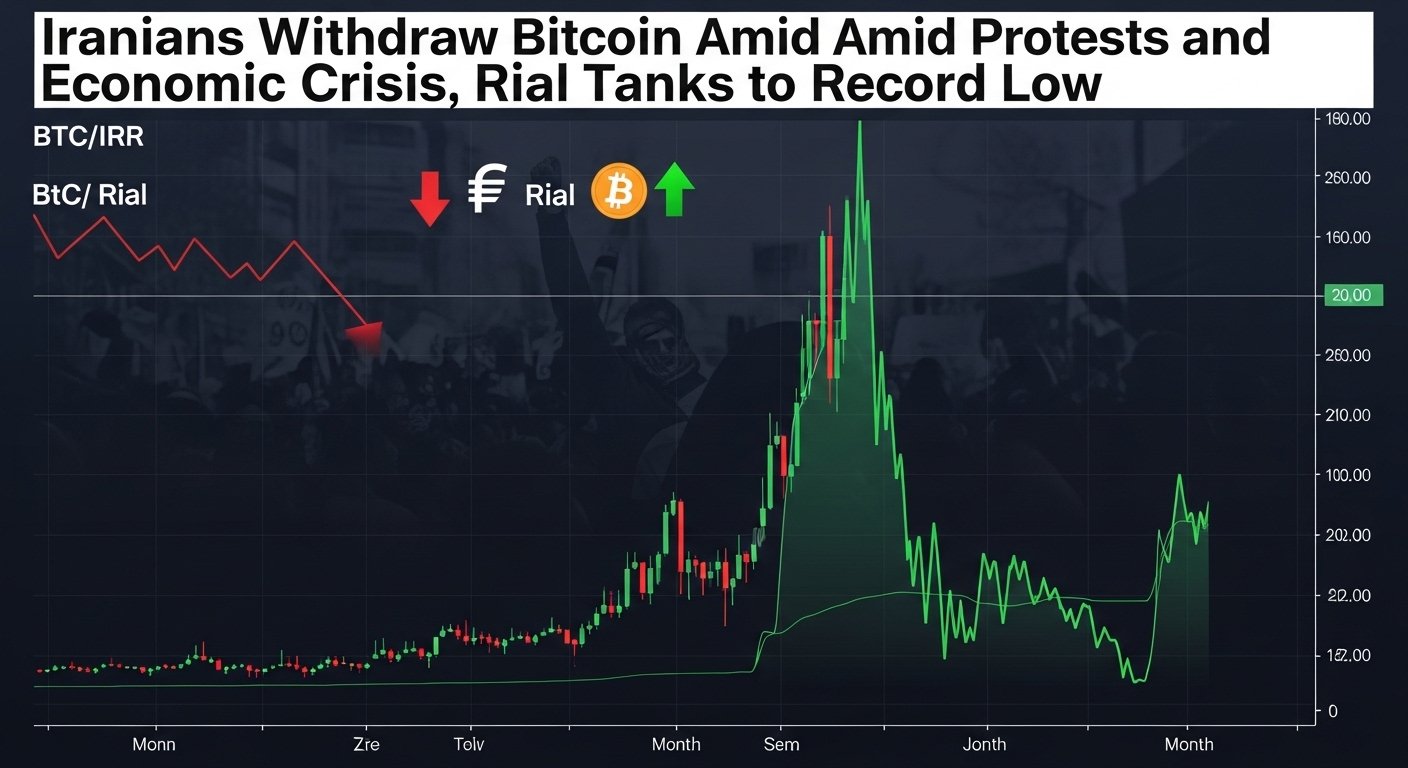
Amid widespread protests and escalating economic uncertainty, many Iranians are increasingly turning to Bitcoin as a way to safeguard their wealth. With the national currency, the rial, plunging to historic lows, digital currencies offer a perceived refuge from the instability plaguing the country. Bitcoin withdrawals from exchanges have surged, signaling growing concern among citizens about the security of traditional financial systems.
The ongoing protests, sparked by social and political grievances, have only intensified the economic turmoil. Banks face irregular operations, and access to foreign currency is tightly controlled. This environment has created fertile ground for cryptocurrencies to flourish as a medium of exchange and store of value, allowing citizens to circumvent restrictions and maintain some degree of financial autonomy.
The Rial’s Rapid Decline
The Iranian rial has suffered a dramatic decline in value, reaching record lows in recent weeks. Inflation has skyrocketed, with basic goods and services becoming increasingly unaffordable for ordinary citizens. The government’s attempts to stabilize the currency have been largely ineffective, and the population is facing mounting pressure as their purchasing power erodes.
Currency traders report intense demand for dollars and other hard currencies, but shortages and government restrictions make access limited. This scarcity has driven many to seek alternatives such as Bitcoin and other cryptocurrencies, which can be accessed online without relying on traditional banking systems. The trend reflects broader economic desperation and a desire to protect personal savings from further devaluation.
Impact on Cryptocurrency Markets
The surge in Bitcoin withdrawals from Iranian users has caught the attention of international markets. Exchanges have noted increased trading volumes originating from Iran, highlighting the growing influence of socio-political events on global cryptocurrency dynamics. The situation demonstrates how domestic economic crises can drive adoption of digital currencies, particularly in regions where traditional financial infrastructure is unstable.
Analysts suggest that if the rial continues to weaken, demand for cryptocurrencies could rise further. This has implications not only for local users seeking refuge from inflation but also for broader cryptocurrency liquidity and market stability. The Iranian example underscores the intersection of technology, finance, and civil unrest in shaping modern economic behaviors.
Looking Ahead
Experts warn that while Bitcoin provides temporary relief, it is not immune to market volatility. Individuals using cryptocurrencies must weigh potential benefits against risks, including price fluctuations and regulatory uncertainties. Despite this, the trend in Iran illustrates a larger shift toward digital assets as a response to economic crises and political instability.
Policymakers face the dual challenge of addressing public grievances while managing the fallout from a crumbling currency. Until meaningful reforms are implemented, it is likely that Iranians will continue to seek alternatives to protect their financial well-being, making Bitcoin and other cryptocurrencies a central tool in navigating the current economic landscape.
FAQs
Why are Iranians turning to Bitcoin?
Iranians are increasingly using Bitcoin to protect their savings from the rapid decline of the rial and to bypass banking restrictions amid economic instability.
How low has the rial fallen?
The rial has reached record lows, with inflation making daily expenses much more costly and reducing the population’s purchasing power.
Does Bitcoin solve Iran’s economic problems?
While Bitcoin provides a temporary refuge for individuals, it does not address the underlying economic and political challenges driving the crisis.
Is cryptocurrency widely accessible in Iran?
Cryptocurrency access is growing, particularly online, though regulations and government restrictions can create barriers for widespread adoption.