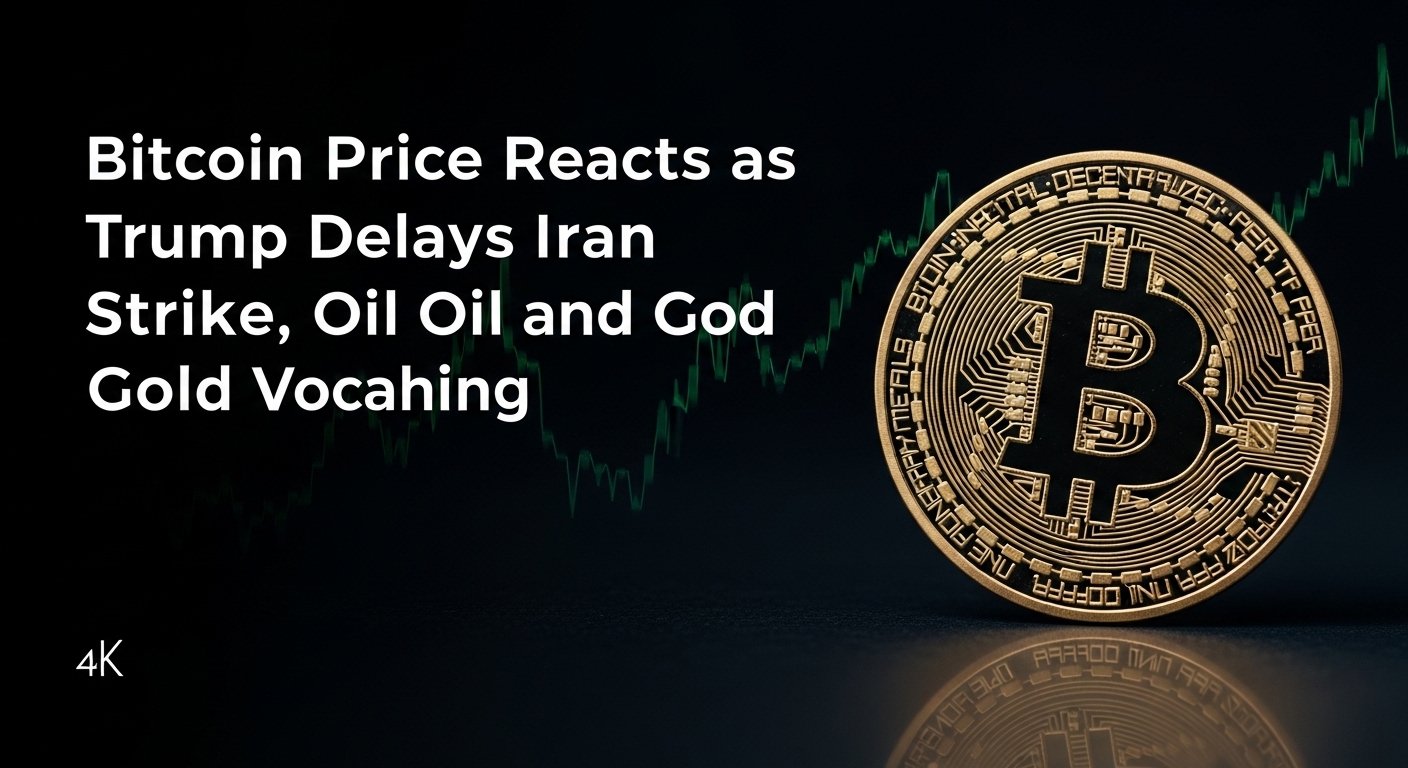
Geopolitical Tension Drives Bitcoin Market Volatility
Bitcoin once again proved how sensitive it is to global geopolitical news after reports that former U.S. President Donald Trump delayed a planned strike on Iran. The decision temporarily eased fears of an immediate military escalation, and markets quickly reacted to the shift in sentiment. Bitcoin moved sharply as traders adjusted their positions in response to changing risk expectations across global assets.
At the same time, oil and gold markets also experienced strong volatility. When the threat of conflict appears to rise, investors typically move toward safe-haven assets like gold and push oil prices higher due to supply disruption fears. However, when tension cools or delays occur, those same assets often reverse quickly, creating sudden price swings. This back-and-forth environment has turned global markets into a fast-moving reaction system where news headlines directly impact pricing behavior across crypto and commodities.
Bitcoin’s Reaction and the Risk-On Market Shift
Bitcoin’s reaction to the Iran strike delay highlights its growing role as a liquidity-driven risk asset. Instead of acting purely as a traditional “safe haven,” Bitcoin often behaves more like a high-volatility macro asset that responds to shifts in investor confidence. When geopolitical pressure eased after the delay announcement, traders rotated back into risk assets, helping Bitcoin recover from earlier uncertainty.
This type of movement is closely tied to broader financial conditions. Lower perceived conflict risk reduces inflation expectations, especially when oil prices stabilize or decline. That, in turn, improves sentiment for assets like crypto and equities. Meanwhile, gold tends to pull back when fear premiums drop, reinforcing a short-term “risk-on” environment. In this cycle, Bitcoin has increasingly mirrored liquidity flows rather than standing apart from traditional markets.
Oil and Gold Markets Remain Highly Sensitive
Oil and gold continue to show heightened volatility due to ongoing uncertainty in the Middle East. Oil prices react strongly to any possibility of supply disruption, especially around key shipping routes. Even minor political signals can trigger sharp price movements, which then ripple into global inflation expectations and investor behavior.
Gold, on the other hand, remains the classic fear hedge. When geopolitical risks rise, demand for gold increases as investors seek stability. However, when diplomatic developments or delays reduce immediate conflict fears, gold often sees quick profit-taking. This constant shift between fear and relief has made both oil and gold highly reactive to every new headline, reinforcing their importance in global macro trading strategies.
Market Outlook: What Comes Next for Bitcoin
Looking ahead, Bitcoin is likely to remain tightly linked with geopolitical developments and macroeconomic sentiment. If tensions between the U.S. and Iran escalate again, oil could spike and trigger renewed volatility across crypto markets. On the other hand, continued delays or diplomatic progress may support a more stable, risk-on environment, potentially allowing Bitcoin to test higher resistance levels.
Traders are now closely watching global political signals, oil supply conditions, and inflation expectations. In this environment, Bitcoin is not just a digital asset—it is increasingly functioning as a real-time indicator of global risk appetite.
FAQs
Why did Bitcoin react to Trump delaying the Iran strike?
Bitcoin reacted because geopolitical tension influences global risk sentiment. When conflict risk decreases, investors often shift back into risk assets like crypto.
Why are oil and gold so volatile right now?
Both assets react strongly to geopolitical uncertainty. Oil responds to supply risk, while gold reacts to fear and uncertainty in global markets.
Is Bitcoin considered a safe-haven asset during conflicts?
Not consistently. Bitcoin often behaves like a risk asset, moving with liquidity and investor sentiment rather than acting like gold.
What could happen to Bitcoin if tensions rise again?
If tensions escalate, markets may turn risk-off, which could lead to short-term Bitcoin volatility or price drops alongside broader financial markets.