
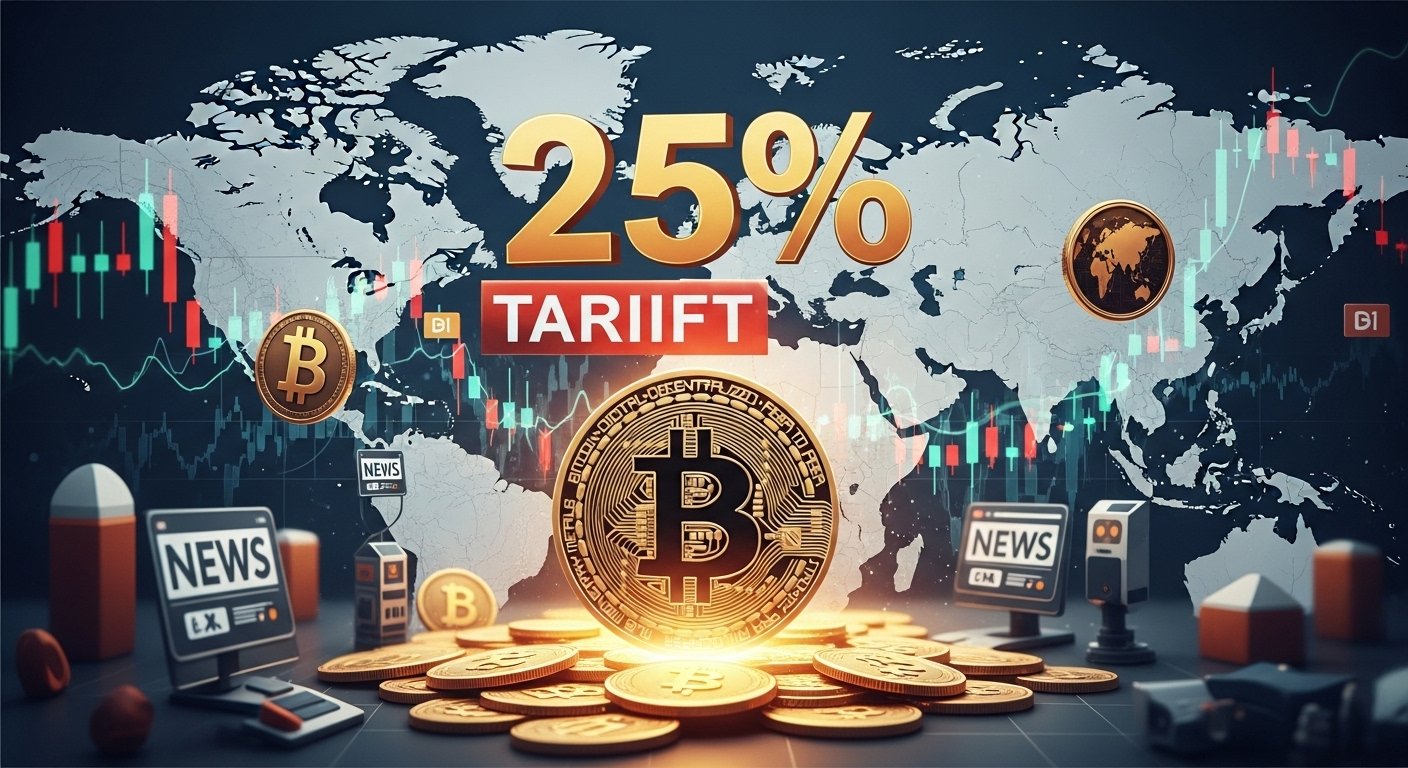
The cryptocurrency market is experiencing turbulence as former U.S. President Donald Trump imposes a 25% tariff on European imports, citing issues surrounding Greenland. This unexpected move has caused a ripple effect across global financial markets, with Bitcoin showing significant volatility. Traders and investors are closely monitoring the situation, weighing the potential impact on digital currencies as traditional markets react to geopolitical tensions.
Bitcoin, often seen as a hedge against economic uncertainty, is under the spotlight as fears of trade disruptions rise. Analysts suggest that while some investors may turn to cryptocurrencies to protect their assets, others might hesitate due to the unpredictable nature of both tariffs and market sentiment. The digital currency’s performance in the coming days will likely reflect broader concerns about international trade and economic stability.
Market Reactions and Investor Sentiment
Financial markets reacted swiftly to the announcement, with European stocks showing a mixed response while U.S. markets demonstrated signs of caution. Bitcoin initially saw a surge in trading volume, reflecting a mix of speculative activity and genuine hedging strategies. Many investors are trying to gauge whether this volatility will persist or if it represents a short-term reaction to the news.
Investor sentiment is split as experts debate the long-term consequences of such tariffs. Some argue that the measures could push more individuals toward decentralized assets like Bitcoin, while others caution that global trade tensions might depress overall economic confidence, impacting cryptocurrency indirectly. This delicate balance of risk and opportunity is keeping traders on edge.
Potential Implications for Bitcoin and Global Trade
The tariff announcement has broader implications beyond immediate market reactions. If trade tensions escalate, there could be increased demand for alternative investment options, including cryptocurrencies. Bitcoin may benefit from this trend as more people seek financial instruments less tied to traditional economic structures.
However, heightened geopolitical friction also introduces uncertainties that could limit Bitcoin’s appeal. Regulatory scrutiny, market manipulation risks, and liquidity challenges remain key concerns for potential investors. Understanding these factors is essential for anyone considering cryptocurrency investment during times of economic turbulence.
Strategic Considerations for Investors
Investors are advised to approach the current situation with caution. Diversification and careful risk management are essential, especially given Bitcoin’s notorious volatility. Market watchers are also paying attention to central bank responses and government actions that could influence investor behavior, both in traditional markets and in digital assets.
For long-term investors, maintaining a clear strategy while staying informed about global events is crucial. Those new to Bitcoin should prioritize education and consider professional advice to navigate this complex environment. Awareness of both macroeconomic trends and cryptocurrency-specific factors can provide an edge in volatile times.
FAQs
Q: How does a 25% tariff affect Bitcoin?
A: Tariffs can increase economic uncertainty, leading some investors to move assets into cryptocurrencies like Bitcoin as a hedge. However, they can also impact overall market confidence, causing volatility.
Q: Is Bitcoin a safe investment during trade tensions?
A: Bitcoin is inherently volatile. While it can act as a hedge, it is not risk-free. Investors should approach cautiously and diversify their portfolio.
Q: Will tariffs on Europe continue to affect global markets?
A: Yes, prolonged trade tensions can influence both traditional and digital markets, potentially impacting investor sentiment and asset prices worldwide.
Q: Should new investors buy Bitcoin now?
A: New investors should research thoroughly, consider risks, and possibly seek professional guidance. Timing and market conditions play a significant role in cryptocurrency investments.